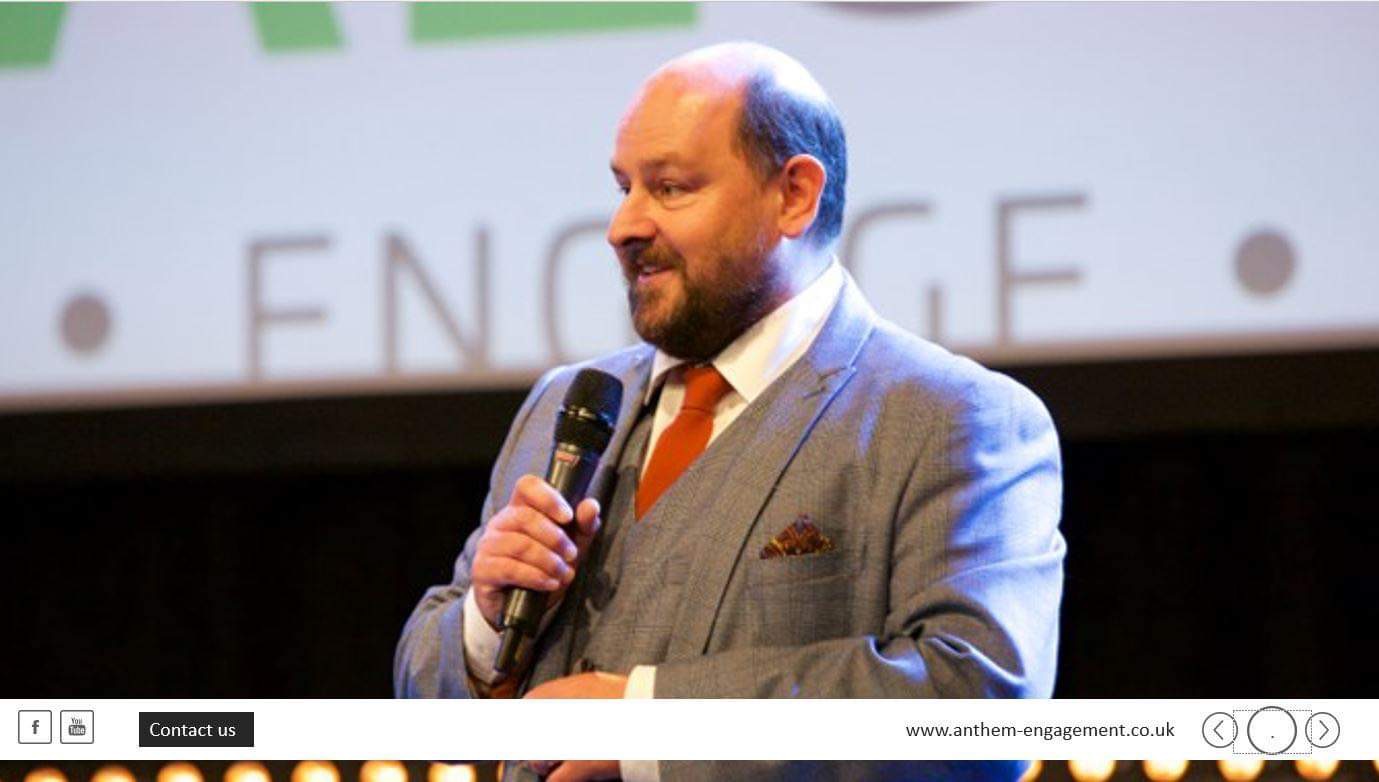
For 25 years, I built businesses by talking to people.
I talked to clients. I talked to prospects. I stood on stages. I ran events. I picked up the phone.
Talking was probably one of the things I was best at.
Then, in November 2021, I had a stroke.
And suddenly, talking became one of the hardest things I could do.
I was left with aphasia, a communication disorder that affects my ability to speak, read and write.
My brain still knows what I want to say.
Getting the words out is the difficult bit.
So what happens when one of the main ways you’ve built a business for 20 years suddenly isn’t available to you?
You change.
Innovation isn’t always about technology
When businesses talk about innovation, we tend to think about new technology, AI, new products or new systems.
Sometimes innovation is much simpler than that.
Sometimes something happens and the way you’ve always done things simply doesn’t work anymore.
You have two choices.
Keep trying to do things the old way.
Or find another way.
For me, that meant completely rethinking how I communicate.
Before my stroke, if somebody wanted to talk about Anthem, I’d probably pick up the phone.
Today, I’d much rather they emailed me.
Not because I don’t want to speak to them.
Because email gives me time to understand the question, think properly about it and give them a considered answer.
If we need a short Teams call afterwards, that’s fine.
But we don’t automatically need an hour-long meeting to start a relationship.
You can build trust through email too.
AI has helped
Technology has certainly played a part.
AI helps me organise some of the thoughts that are already in my head.
It doesn’t give me 25 years of experience.
It doesn’t understand a client in the way I do.
It doesn’t make decisions for me.
But it can help me get the words out.
And when communication is the thing that has become difficult, that’s enormously useful.
Perhaps that’s one of the most important lessons I’ve learned about innovation.
Technology is at its best when it helps a human being do something better.
Not when it tries to replace them.
Anthem has changed too
The enforced break from the business gave me something I hadn’t had for years.
Time to think.
And I started looking differently at the business I’d created.
Anthem has been running employee surveys for more than 20 years.
Millions of employee responses.
Lots of data.
Lots of reports.
Lots of percentages.
But I began asking myself a different question.
What are our clients actually trying to find out?
They don’t really want an engagement score.
They want to know why people are disengaged.
They don’t really want a leadership percentage.
They want to understand why employees don’t trust their leaders.
They don’t really want to know that one department scored 64%.
They want to know what’s happening in that department and what they can do about it.
That’s changing Anthem.
We’ve started bringing what we do together into four areas.
Anthem Benchmark helps organisations understand where they are.
Anthem Teams helps them understand what’s happening within individual teams.
Anthem 360 helps leaders understand how other people experience their leadership.
Anthem Pulse helps organisations see whether the changes they’ve made are actually making a difference.
Measure.
Understand.
Develop.
Measure again.
It’s still employee research.
But increasingly, I don’t think our job is simply to run surveys.
Our job is to help organisations listen.
Listening has become my superpower
There’s an irony in all this.
Before my stroke, I could talk.
A lot.
Some of my clients would probably say too much.
Now I can’t always join in with a conversation in the way I once did.
So I listen.
When I’m working alongside one of our consultants, I can sit in a meeting and listen to what’s being said.
And because I’m not thinking about what I’m going to say next, I’m thinking about what I’m hearing.
What did they really mean?
What wasn’t said?
What doesn’t quite add up?
What connects with something somebody said 20 minutes earlier?
Then I can go away.
Think.
Look at the evidence.
And write the report.
Strangely, some of the work I produce now is probably more considered than it was before my stroke.
Something that initially felt like an enormous professional disadvantage has forced me to develop a different strength.
Listening.
And for somebody who has spent his career asking organisations to listen to their employees, perhaps that’s quite appropriate.
Change isn’t about getting back to normal
For a long time after my stroke, I probably thought success meant getting back to being the person I was before.
I’m not sure I think that anymore.
Before my stroke, I could work from six in the morning until ten at night.
Seven days a week if necessary.
I ran two businesses.
I was constantly available.
I don’t want to go back to that.
My plan now is rather less impressive.
Monday to Friday.
Nine until five.
And I’m quite happy with that.
Innovation isn’t necessarily about doing more.
Sometimes it’s about working out what actually matters and doing that better.
That’s what I’m trying to do with Anthem.
And probably with myself as well.
So what happens when your best salesperson can’t pick up the phone?
You find another way.
You use email.
You use technology.
You ask better questions.
You think more.
You stop assuming that the loudest person in the room has the best answer.
And you listen.
My stroke changed the way I communicate.
Aphasia changed the way I work.
And both have changed the way I think about the business I started more than 20 years ago.
I wouldn’t have chosen any of it.
But change rarely asks for permission.
The interesting bit is what you do next.
What happens when your best salesperson can’t pick up the phone?
You stop relying on the phone.
You listen.
You adapt.
And you get on with building what comes next.

No Comments